
IoT Device-to-Cloud Integration: Define Interface Ownership
Define device, firmware and cloud responsibilities with an interface matrix, message requirements and integration evidence before commissioning IoT development.
Updated
A connected product needs an agreed boundary between its electronics, embedded firmware and receiving system. Before commissioning development, identify who defines each interface, who implements each side and who demonstrates that the complete connection works.
This resource helps CTOs and engineering managers prepare an interface responsibility matrix for an IoT development project. It is particularly useful when an external engineering partner develops the device while an internal team or another supplier provides the cloud platform.
Start with one complete operating sequence
Describe a normal transaction from the physical input to the receiving application. Identify what the device measures, how the firmware represents it, where the message is sent and what the receiving system does with it.
For a product that receives commands, describe the return path as well: who requests the action, how the device receives it and what confirms the resulting state. Distinguish receipt of a command from successful execution.
List every system involved, including gateways or mobile applications where applicable. Assign an owner to each system and an owner to the overall integration decision. A protocol name alone does not define these responsibilities.
Build an interface responsibility matrix
Use the matrix to expose dependencies before teams commit to implementation. The assignments below are decisions for your project, rather than a description of a standard supplier contract.
| Interface or decision | What to agree | Evidence before acceptance |
|---|---|---|
| Sensor or peripheral to firmware | Signal or bus definition, units, valid range and fault reporting | Recorded input and corresponding firmware interpretation |
| Firmware to communications module | Configuration, startup sequence, connection state and recovery ownership | Logs from the agreed operating and interruption conditions |
| Device to receiving endpoint | Endpoint, transport, authentication method and message contract | Messages accepted and interpreted by the intended system |
| Application to device | Command format, validity conditions and acknowledgement meaning | Command receipt, execution result and resulting device state |
| Device provisioning | Who assigns identity and configuration, and when | A documented commissioning sequence exercised on a test device |
| Release compatibility | Supported firmware and interface versions | A recorded compatibility check for the release being accepted |
Add named owners, required inputs and delivery dates to your project copy. Where a responsibility is shared, specify which team supplies each part and who resolves disagreements.
Define the message contract beyond MQTT or HTTP
Choosing a transport does not specify the meaning of the data. Prepare representative messages and a field definition that both teams can review before connecting the first prototype.
For each field, define its type, units, valid values and whether it is required. Explain how missing, invalid or unavailable measurements are represented. If timestamps are used, define what event they describe, the time basis and the behaviour when the device has no reliable clock.
Agree how the receiving system identifies the device and distinguishes message types. If sequence numbers or message identifiers are needed, define their scope and what happens after restart.
For remote commands, record:
- The conditions under which a command is valid.
- Whether commands expire and how expiry is assessed.
- What an acknowledgement confirms.
- How rejection or execution failure is reported.
- What should happen if the same command arrives again.
Keep examples and field definitions under version control. A sample payload is useful, but it should not be the only specification.
Allocate failure handling between the teams
Decide which component detects each failure and which component takes the next action. Otherwise, device and platform teams can each assume that the other side handles recovery.
For a network outage, agree whether the device retains data, what limits apply and what happens when those limits are reached. Define how communication resumes and how the receiving system handles delayed or repeated records.
For an unavailable endpoint, distinguish connection failure from application rejection. Agree which conditions should trigger another attempt, which need configuration changes and which require engineering investigation. Any retry timing or storage limit should come from the product requirements and agreed architecture.
For remote control, define the expected device state when communication is lost. The appropriate behaviour depends on the application; it should be an explicit product decision.
Make test access and configuration deliverables
Device integration depends on inputs from the receiving-system team. Identify when endpoint documentation, a test environment, test identities and example responses will be available.
Agree who maintains these inputs and how configuration changes are communicated. Separate test and production configurations, and establish an approved process for providing sensitive access information.
If the intended platform is unavailable during early firmware work, agree what a simulated endpoint will cover. Record the remaining integration checks that require the actual receiving system. Passing against a simulation should leave that dependency visible.
Accept a defined combination of releases
Record the PCB revision, firmware release, communications configuration and receiving-system interface version used for integration testing. Include any gateway or application version that affects the result.
Choose tests that cross the responsibility boundaries: a measurement reaching the receiving application with the correct meaning, a command producing the expected device state, and recovery after an agreed interruption.
For each test, retain the setup, steps, expected result, actual result and relevant logs. Assign unresolved issues to an owner and identify whether they prevent acceptance or are accepted limitations.
The IoT prototype acceptance-plan resource covers the broader requirement-to-test workflow. This interface matrix defines which teams must supply the connected parts and how their responsibilities meet.
Bring the integration boundary to your engineering discussion
Prepare the operating sequence, system diagram, responsibility matrix, draft message contract and list of unavailable inputs. Mark decisions that remain open, including connectivity, platform ownership and maintenance responsibilities.
Pleeda's IoT product development service covers electronics, embedded firmware, connectivity architecture and technical validation. Its English service page describes communications using MQTT, HTTP and other product-specific protocols to connect devices with cloud services or integration systems. Agree the scope of the receiving platform separately rather than assuming that device connectivity includes platform development.
For the wider procurement brief, use the IoT development RFQ checklist. For implementation capabilities, review PCB design and microcontroller programming.
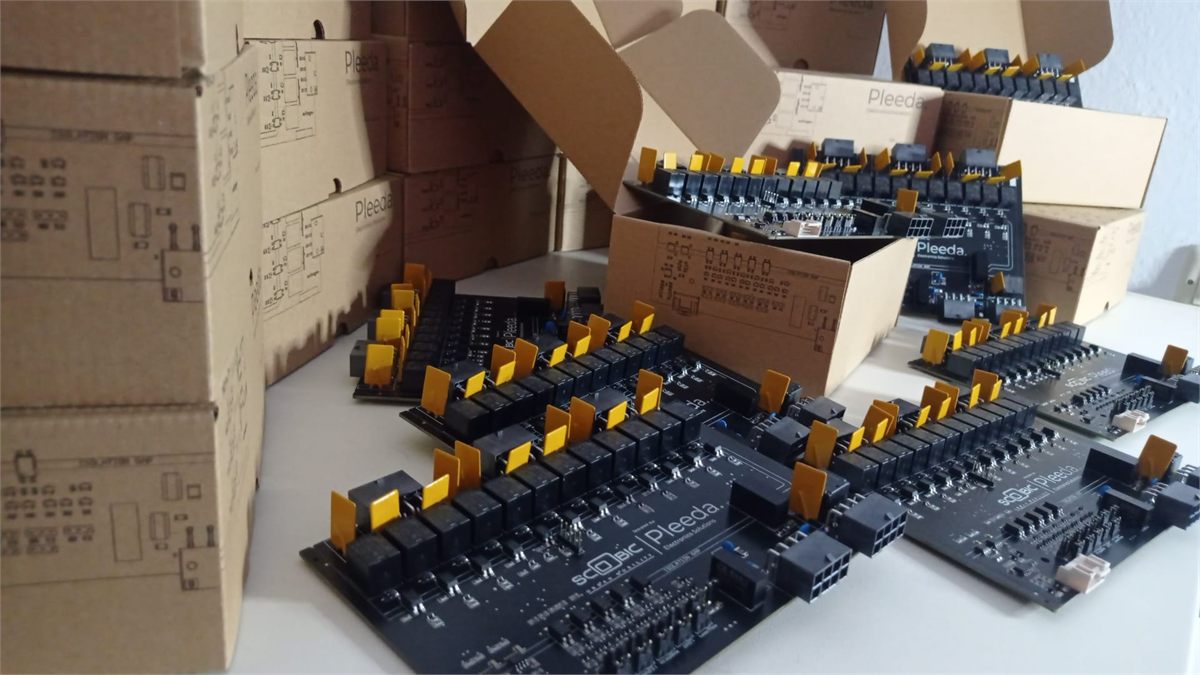
The accompanying photograph shows PCB assemblies from Pleeda's Scoobic last-mile vehicle project. It illustrates real embedded hardware; the interface matrix here is guidance for scoping your own product and does not describe that project's cloud architecture.
Discuss your hardware, firmware and connectivity scope with Pleeda. Share the systems already available, the interfaces your team owns and the engineering decisions that need to be resolved.
References
- Pleeda IoT product development: electronics, firmware, communications architecture and integration with external systems.
- Pleeda microcontroller programming: peripheral integration and embedded communication protocols.
- Pleeda PCB design: product architecture, interfaces, prototype support and manufacturing documentation.