
IoT Prototype Validation: Define an Acceptance Plan
Define IoT prototype acceptance with measurable requirements, hardware and firmware revisions, outage tests and evidence for the next engineering decision.
Updated
An IoT prototype demonstration shows that a device can perform a task under the conditions of that demonstration. Before approving the next development phase, a product team needs evidence against the requirements that matter in deployment.
This guide helps CTOs and engineering managers define a prototype acceptance plan with an electronics and embedded firmware provider. Its output is a requirement-to-test matrix, a reproducible test record and a decision about the next engineering phase.
Define the decision before selecting the tests
State what the validation work must support: an architecture decision, acceptance of a functional prototype, a field trial or preparation for a pre-series build. These decisions can require different evidence.
Identify the configuration being assessed: PCB revision, BOM revision, firmware release, enclosure, antenna arrangement, power source and connected systems. Record temporary development arrangements, such as an external laboratory supply or a substitute sensor. Results obtained with those arrangements need to be interpreted within that boundary.
Define what remains outside the assessment. Prototype acceptance should not silently become a claim that production testing, regulatory assessment or long-term durability work is complete.
Build a requirement-to-test matrix
Each requirement should identify an operating condition, an observable result and an acceptance criterion. Where a limit remains unknown, assign an engineering task to establish it before the acceptance decision.
| Area | Conditions to specify | Evidence to request |
|---|---|---|
| Power | Supply range, operating modes and expected load transitions | Measurements tied to the tested configuration and operating mode |
| Sensing and control | Input ranges, reference conditions and output behaviour | Recorded inputs, measured outputs and comparison with agreed limits |
| Communications | Network setup, message behaviour and outage conditions | Logs showing connection, data transfer, failure and recovery |
| Hardware-firmware integration | Startup sequence, peripheral readiness and fault states | Reproducible test steps and observed system behaviour |
| Mechanical integration | Enclosure, connectors, mounting and antenna arrangement | Configuration record and checks of the assembled prototype |
| Robustness | Relevant disturbances and operating constraints | Test conditions, results, deviations and unresolved issues |
Avoid acceptance criteria such as “stable connectivity” without defining the observation period, installation conditions and permitted behaviour. Numerical limits should come from the product requirements or an explicitly approved engineering assumption.
Measure power in the intended operating sequence
A current reading from one operating state does not describe the complete use cycle. Identify the states that affect the product: startup, sensing, processing, transmission, idle and any required recovery sequence.
Agree how measurements will capture transitions as well as steady operation. Record supply voltage, firmware configuration, connected peripherals and communication conditions so another engineer can interpret the result.
For a battery-powered product, distinguish measured consumption from estimated battery life. Any runtime estimate should state its assumptions about activity, communications and usable battery capacity. If these inputs remain provisional, retain that uncertainty in the acceptance report.
Test communication failures as defined behaviours
Normal data transfer is only one part of connected-device operation. Agree which interruptions the prototype must handle and what the device should do during each interruption.
Useful questions include:
- What happens when the local network or cellular connection is unavailable?
- Which data must be retained, and what happens when storage reaches its agreed limit?
- How does the device resume communication after service returns?
- How should the receiving system interpret delayed or repeated messages?
- Which diagnostic information is available when a connection fails?
Use a controlled test setup where practical. Record how an interruption was introduced and how recovery was observed. A test against a simulated endpoint can isolate device behaviour; an integration test with the intended external system addresses a different part of the acceptance scope.
Include startup, reset and peripheral faults
Identify the transitions that can expose integration problems: applying power, restarting the firmware, reconnecting a peripheral and restoring an interrupted supply.
Specify the expected output state during startup and recovery, particularly where the device controls an actuator. If a sensor is missing or returns unusable data, define how the firmware should report the condition and how the rest of the system should respond.
Select tests according to the intended application and agreed risk assessment. Destructive or specialist environmental tests require an appropriate method, equipment and scope; they should not be improvised as part of routine prototype bring-up.
Require a reproducible evidence package
Agree the reporting format before testing begins. Each result should connect the requirement, procedure and tested configuration.
Request:
- A test identifier and the requirement it checks.
- Equipment, setup, configuration and relevant operating conditions.
- Expected behaviour, acceptance limits and actual results.
- Supporting measurements or logs where needed to assess the result.
- Deviations, limitations and unresolved issues.
- The configuration and scope required for any retest.
A corrected firmware release or PCB revision changes the configuration under assessment. Record which failed tests were repeated and consider which previously passing behaviours may also be affected by the change.
Turn the findings into a phase decision
Review results against the agreed criteria rather than relying on a general statement that the prototype works. Record whether the next phase can proceed, which conditions apply and who owns each unresolved issue.
Distinguish a design correction from a missing requirement or an external dependency. Give each open issue an owner and define the evidence needed to close it. Keep accepted limitations visible in the handover record.
Manufacturing readiness also needs its own scope. A prototype validation report does not define production programming, unit-level functional tests or batch acceptance unless those activities were explicitly included.
Discuss the validation scope with Pleeda
Pleeda's IoT product development service includes electronics, embedded firmware, communications and technical validation. Its electronic circuit validation service covers specification-based hardware and firmware assessment, debugging and robustness checks.
For an initial discussion, prepare the use case, current design stage, available hardware and firmware revisions, known issues and the decision the validation work must support. Include existing requirements and test results, with assumptions clearly marked.
If you are still preparing the overall development enquiry, use the IoT development RFQ checklist. For quotation of an existing manufacturing package, use the PCB manufacturing quotation checklist.
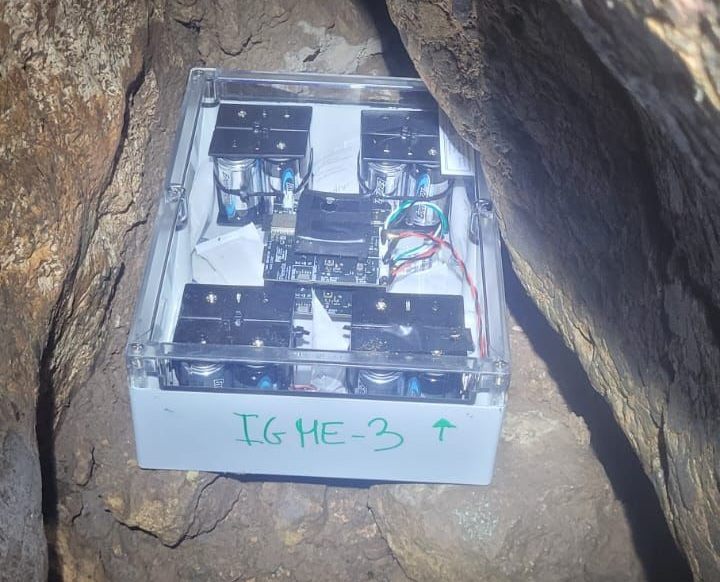
The accompanying photograph shows electronics from Pleeda's IGME-CSIC muon detector project in a transparent enclosure. It provides a real example of integrated field instrumentation; the acceptance workflow described here is guidance for defining your own project scope.
Discuss your prototype validation requirements with Pleeda.
References
- Pleeda IoT product development: prototype validation of consumption, communications, robustness and hardware-firmware integration.
- Pleeda electronic circuit validation: specification-based testing, debugging and hardware and firmware assessment.
- Pleeda PCB design: prototype support, electrical and functional review, test points and manufacturing documentation.